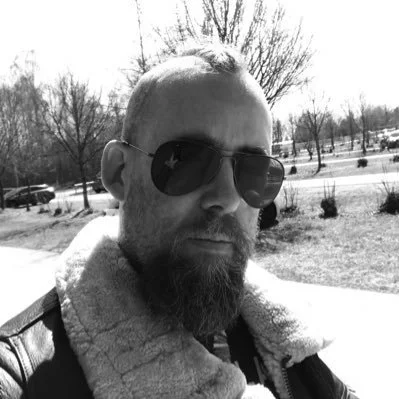
Interviewing Steve Toase
Hellooo!
I recently had the pleasure of reading Crawl Space by Steve Toase a book I really loved but do not recommend reading just prior to a dentist appointment. That was my rookie error but if you fancy a story of the weird that gets stranger than you expect then dive right in. It was a pleasure to chat to Steve about the book and a few other things.
How do you like to booktempt Crawlspace?
While recording abandoned vacuum postal systems in a small German city for the Durchsickern Institute, Rachael and Ben make a discovery that should be impossible. What at first seems like a measuring error reveals the dangerous and disturbing Crawl Space.
Once they enter the Crawl Space, will Rachael and Ben make it out again in one piece, and why is Herr Bettelmein so interested in their discovery?
Archeological horror has a firm place in the genre but this time we seem to be more in the shady business end of it? What drew you to the world of the mail pipes?
Initially, it was finding out about these pneumatic postal delivery systems, and finding some plans online showing them under different European cities, including Munich where I was living at the time. It's recent enough to be familiar, but far enough away to be unsettling, if that makes sense. It's no longer part of our everyday life, but is related to a version of our society we like to think we recognise.
Archaeology is a profession of niches and obsessions. People often find themselves focussing on one type of monument, theme or artefact type, and building up a store of very specialist knowledge. People do leave archaeology, particularly if they've been working in fieldwork, as it can be hard on the body. When I personally stopped doing fieldwork, I found myself into this adjacent and associated space, using the skills I'd learned while studying for an MA in Landscape Archaeology to work in GIS with historic maps. For Rachael, I imagined somebody leaving excavation for reasons explained in the story, and becoming a specialist in this very specific niche area, that might actually bring enough work to keep a couple of people employed.
The initial setting for your story is a fascinating town where did this come from?
It's a bit of an amalgamation of small central European towns, but I was trying to get that sense of feeling untethered when working in a town youdon't really know.
I spent the early part of my career working away, and we were often put up in holiday rental accommodation or B&Bs. You would have to find places to eat, shops to get supplies, and local pubs to drink in where there might be unspoken rules you only know after going there for ten years. As someone only in the area temporarily, you're never going to know the etiquette of these places, and always feel on the outside of those communities.
All of this can be very disorientating and isolating. My experiences are in England, but I think when your in a different country where you don't have a full command of the language, it can increase that sense of disassociation.
Teeth? Why are they disconcerting please discuss?
Teeth are very disconcerting. Although technically not correct, it's often said that teeth are the only part of the skeleton that we can clean. I think it's also the only part we ritualise the loss of. At least in British society with the leaving of them for the tooth fairy in exchange for money, something that is very similar to sympathetic magic where hair or nail clippings are used to make a link between an individual and the magic being practised (see the use of poppets in British witchcraft).
Also, the condition of teeth is often used to reach conclusions about class and social standing, with moral judgements about character attached to those conclusions, when often it's just about access to good dental care. I think another aspect is that when teeth go wrong it can be incredibly unpleasant but not necessarily visible (Laurence Olivier in Marathon Man helped to fix this in the popular imagination).
While writing Crawl Space, I found out it was common for people, particularly women, in the first half of the 20thcentury to have all their teeth removed as a 21st birthday or wedding present, to prevent the risk of infections and the devastating damage they could do. Teeth keep coming up in my fiction. I had a story published in Horrific Scribblings last year called Dental Hygiene, and The Enamelled Crown in Hinnom Magazine back in 2017.
The story eventually goes into out of our world and without spoiling it too much how is creating a non-human world both thrilling and difficult?
It's interesting to scour our world for locations that will fit in 'behind the scenes', so when I was writing that part of the book, I was thinking of places like abandoned buildings where the attic space is taken over by pigeons, with generations of birds living and dying there, or boxes of damp books found in garden sheds, each one too mildewed to be read again. Those places can be really unnerving, void of people but still with traces of life. These are also the sort of places that you often encounter early on in excavations, particularly if there are standing buildings.
A big element of Crawl Space is texture, and a lot of my obsession with that comes from similar experiences on archaeology sites. I remember finding some very modern (last ten years) cufflinks that had already accreted with verdigris, and finding the texture very tactile in a way that turned my stomach.
One of the biggest challenges with writing this other place was the lack of any characters or living creatures. The identity is all in the locations themselves. There's no life but there is personality, and hopefully a real sense of atmosphere. A sense of loss and melancholy.
What else can we look forward to from you in the future and where can we find out more?
I have a few short stories coming out this year, in Nightmare Magazine, Bourbon Penn, Chthonic Matter Quarterly, and the anthology Unearthed: New horror of Ancient Ruins, published by Titan Books and edited by Dan Coxon and Philip Fracassi. I'm working on a new novel, and have two more I'm currently pitching. All three are very different from each other, but hopefully I'll find a home for them soon.
I have my blog stevetoase.wordpress.com, where I mainly write about films, books and soundtracks with a focus on biker pulp fiction from the 1960s and 1970s. I also have a Patreon (www.patreon.com/stevetoase) where for $5 a month you get a flash fiction story in your inbox every Monday morning.
What great books have you read recently?
I read Absolution by Jeff VanderMeer, which was a suitably strange ending to the Southern Reach series. I'm currently reading two Bordertown anthologies, The Essential Bordertown, and Welcome to Bordertown, both set in the shared world created by Terri Windling. Alongside this, I'm reading Borderlines: A History of Europe in 29 Borders by Lewis Baston.
(You might notice a theme developing.) Another fascinating book I recently read was A History of Europe in 12 Cafés by Monica Porter. As a result, I've identified several new places I need to visit for coffee and cake.