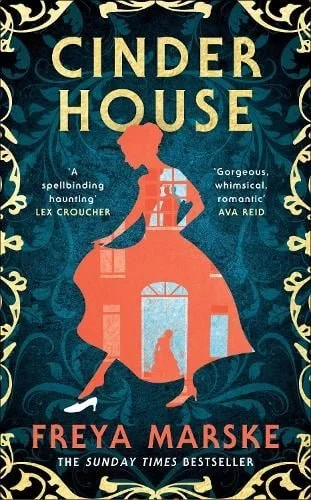
Cinder House by Freya Marske
Publisher - Tor
Published - Out Now
Price - £16.99 hardback £5.99 ebook
You think you know Cinderella’s story: the ball, the magical shoes, the handsome prince.
You’re halfway right, and all-the-way wrong.
Ella is a haunting. Murdered at sixteen, her furious ghost is trapped in her father’s house, invisible to everyone except her stepmother and stepsisters.
Even when she discovers how to untether herself from her prison, there are limits. She cannot be seen or heard by the living people who surround her. Her family must never learn she is able to leave. And at the stroke of every midnight, she finds herself back on the staircase where she died.
Until she forges a wary friendship with a fairy charm-seller, and makes a bargain for three nights of almost-living freedom. Freedom that means she can finally be seen. Danced with. Touched.
The retelling of stories is very likely as old as stories. Everything evolves and who knows suddenly everyone is doing think pieces of the importance of Greek myths again. If stories don’t change into new forms then they can’t do the most important thing they exist for reflect the world back at us. But for me the key is does the change assist the story and u fortunately the Hugo nominated novella Cinder House by Freya Marske for me tries to do a few too many things at once and this really undermines the story.
Ella died minutes after her father is poisoned by her stepmother and finds herself haunting her family home. Her stepsisters and step mother know she exists though and soon recognise with appropriate pressure they can have a servant they do not need to pay. However Ella learns to beat the confines of her house and when it is announced that a Ball for all women in the city is being held by the charming Prince she knows she must try and attend.
Yes this time Cinderella is getting retold and the idea of Ella as a Ghost starts promising but essentially I feel Marske has to then downplay that key feature at every turn. Ella learns she can leave the building, she can visit theatre shows, be seen by the magical fae community who she can befriend, she can age severa years which suits meeting a handsome Prince some time later, she can hold objects (but for plot reasons can’t use them to hurt her cruel family), she can converse with magical academics and ultimately I feel seems to get through all challenges without much actual challenge. Marske mention this in her introduction as a link to those with chronic illness and disability but I feel the ghost metaphor didn’t really help this. An actual living Ella with this may actually have been a better choice and explain how Ella finds ways to manage the world she is in rather than all this handwavium. How a character finds ways to beat the limitations of their world and body to live the life they want would have been a lot more interesting to me. There was a lack of jeopardy throughout as I started to suspect Ella would of course by chance find a way through.
Marske throws in lots of other events. A cursed prince, a magic wielding evil step sister, a complex mother and father relationship, court intrigue and assassination attempts. Plus a romantic relationship that again feels more plot convenience than organic Ella is just so apparently easy for all to love. At novella length it’s a odd mix of lots of things being thrown at the story but very little coming together to make any real impact and for me it feels like it could do with reducing the many events to be more effective perhaps as a short story or add a lot more pacing and drama to become an effective novel.
As such as a novella I don’t feel this really works very well. It can be a breathless read where things happen but I suspect it won’t linger long in the memory. Ultimately an odd mix between overcooked with ideas and undercooked with tension. Sadly not one I can recommend.