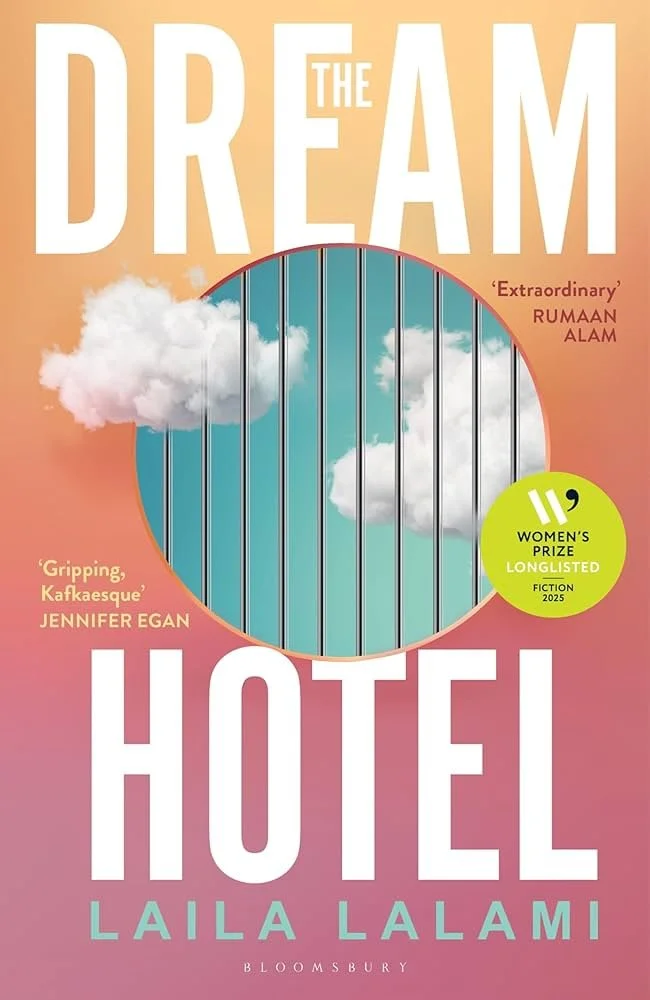
The Dream Hotel by Laila Lalami
Publisher – Bloomsbury
Published – Out now
Price – £16.99 hardback £7.99 ebook
Sara is returning home from a conference abroad when agents from the Risk Assessment Administration pull her aside at the airport. Using data from her dreams, their algorithm has determined that she is at imminent risk of harming her husband. For his safety, she must be transferred to a retention centre, and kept under observation for twenty-one days.
But as Sara arrives to be monitored alongside other dangerous dreamers, she discovers that with every deviation from the facility's strict and ever-shifting rules, their stays can be extended - and that getting home to her family is going to cost much more than just three weeks of good behaviour.
Then, one day, a new resident arrives, disrupting the order of the facility and leading Sara on a collision course with the very companies that have deprived her of her freedom.
Science fiction and dystopias have a long history of being together. How can technology control or monitor us? In an age where we are all online it’s often surprising how much can be gathered about ourselves. Who uses that information? Can we trust them? This is one of the strands being explored in the Clarke nominated novel The Dream Hotel by Laila Lalami which tries to knit several ideas together but ultimately, I felt quite disappointed by it.
The US finally decided after a dreadful televised gun attack that something needed to be done and so began a new programme to identify criminals before they act. The Risk Assessment Administration monitors everyone and has successfully led to a drop in crime. Many years Sara files into LAX after a work trip and s about to be picked up by her husband when something raises a flag. She appears to be a risk of harming her husband and so must go to one of the assessment centres to be evaluated for 21 days. While not quite a prisoner she cannot leave and any breach of rules will lead to a longer stay. Sara has been here for now over 200 days and her chances of leaving feel smaller than ever.
The strongest part of this novel is how the US borders system can be very racist and as Sara is a woman of colour then as soon as she questions how the airport security staff are treating her they use their full force to destroy her life. A casual abuse of power that leads to someone losing a year of their life. These days that is not surprising me in the least. Sara being a middle class professional and suddenly plucked from her life is a sign a State unchecked can do this to anyone. Sara’s reaction of confusion, anger and slow building defiance work very well at the start but then feels underused.
My first issue is that after her arrest becomes a fairly familiar prison drama. Sara has to bond with her fellow inmates, tackle a particularly unpleasant prison guard, break rules and yet also find a way out. It’s a fairly familiar structure that we constantly see in movies, TV and novels and for me the only new angle is here the prisoners are people deemed potential risks not committed crimes. There was though a sense of Sara being more inconvenienced than losing her rights. It’s a thing that happens to her rather than a major event changing her. There are some odd choices. We see Sara’s marriage strained and her husband starts not to visit or send messages. This is apparently due to his own stresses and by the end all is back to normal, without any major act of reconciliation, forgiveness or admission he is doing things wrong. Storywise the ending as a while felt pat and more ‘well we all learned some lessons and somehow, we can do more to help people’. I didn’t though sense Sara was really a character who could drive such an agenda through.
At the requirement to be a work of science fiction I do have to say this too felt very slight. There are some attempts to extrapolate how algorithms can be farmed to predict behaviour, and there are some recognitions of the flaws of such an approach especially that tie together with corporate greed but its all explored in passing without any real interrogation of the issues, not aided by Sara being locked down for most of the story. Ultimately this feels just a device to imprison Sara and even the eventual reckoning is that some bad dreams were simply misinterpreted and that indeed feels like something that is genuine could have been resolved weeks ago. It also points to how bad such a system would be, so I struggled to see how this has been in operation for years. Overall, I don’t really feel I’ve seen anything particularly interesting with this element of the story.
The Dream Hotel I ultimately feel is a bit of a disappointment. It’s a polite mainstream dystopian novel highlighting some potential warnings for the future but for me doesn’t really handle either of those asks in any standout way. In some ways the dystopia here feels more one warning from the earlier 21st century, while now we know that the US doesn’t need a fancy hi-tech system to detain people it just moves the troops in and picks up whomever it wants. This ultimately feels a curiously flat science fiction novel that I suspect like most dreams will not last long in my memory.