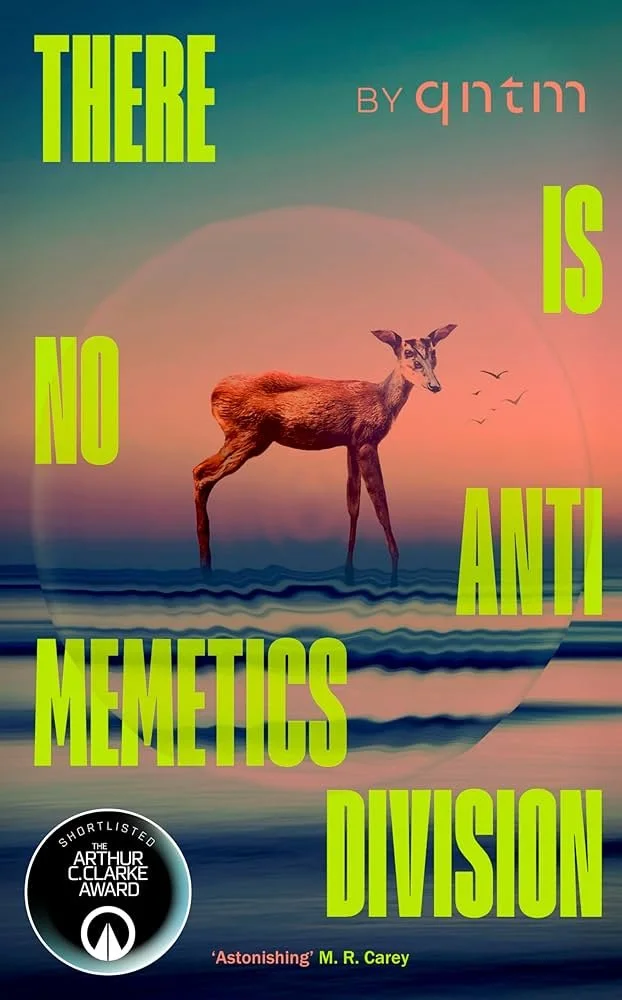
There Is No Antimemetics Division by qntm
Publisher – Penguin
Published – Out Now
Price –£18.99 hardback £7.99 ebook
An antimeme is an entity with self-censoring properties. Some are benign; but others, less so…
These entities can feed on your most cherished memories, the things that make you you – and you’ll never even know anything changed.
And they aren’t just feeding on us. They’re invading.
But how do you contain something you can't record or remember? How do you fight against an enemy with effortless, perfect camouflage, when you can never even know that you're at war?
WELCOME TO THE ANTIMEMETICS DIVISION
NO, THIS IS NOT YOUR FIRST DAY
In some ways Science Fiction should be the opposite of horror. The genre that looks for the answers, logic and progress. But horror lies in what we do not know and understand. Scientists know we do not have all the answers yet so in those gaps there is room for something to invoke fear. So it has a history of stories where experiments go wrong, aliens that seek to destroy the world and occasionally a logical discovery that means we see what really lies beneath the universe. In the next Clarke Award nominees I found qntm’s There Is No Antimemetics Division a fascinating reminder that science fiction can be downright unnerving and there is deliciously smart storytelling to enjoy as well.
The Organisation knows that there are ideas that can destroy our world and reshape it. This has happened many times over human history. At its source are Unknowns objects and entities that are kept guarded or being sought to prevent them affecting reality. A key element of the Organisation is the Antimemetics Division led by Director Quinn but there are signs of a rising threat. One no one can understand without being destroyed by it. How can you stop an idea?
This is a fascinatingly structured mosaic novel that has a distinct ability to unnerve the reader and rarely goes in for the blood and gore that some people think horror must have. This is instead horror playing with the concept of reality not being what you you think it is and is incredibly effective at making concepts scary. As such qntm in each chapter tells a part of the story and unusually we as the reader get a much better idea of what is going on across a long period of our history than any of the characters we meet as we put the jigsaw piece of past, present and future together.
The idea of secret departments investigating the unknown is long-standing in science fiction and with echoes of The X-Files (which this book affectionately mocks) and there is even a slight feeling of the Men In Black here this could very easily for some writers just have turned into a pulpy adventure. Instead, it works with each chapter showing us part of the Division’s work. There is an impressive method in how qntm builds a short scene and then flips it. The threat is never quite where you think it is. Who you think is in control of a situation is perhaps not. You may like a character we meet and find that their fates are let’s just say sub-optimal. You can’t trust your eyes, and this therefore gets a reader nervous as each little story starts. The wider novels used these to flip back and forth in time and small clues like the size of the Division’s workforce will start to hint that all is not quite what we thought it was. A fundamental part of each story is that these threats are incredibly dangerous, the methods to stop them are high risk and not always effective and anyone can die from them. This is an unsettlingly tense read!
Another powerful aspect for why this works so well is the secret history of the world that is created. Through official reports that are censored, mysterious objects that can be incredibly dangerous or occasionally just plain odd (wait until you meet the bicycle cycle) there is the recurring idea of dangers hiding in plain sight that through the Division’s work we do not see. On top of that qntm is able in scenes to then break reality and then the sense of the invisible suddenly becoming aware of us. That is when things get creepy. In one chapter a single employee gets an unnerving sight in the office and we suddenly see this is what every day in the Division is like, you can suddenly find yourself running down endless corridors, lifts and hoping that either you find a solution or you will be likely not just be dead but forgotten about by everyone who ever knew you. There are stakes in each story and it cements the sense that the threat is very real, building its strength up and yet at the same time quite unknowable and very very hard to beat as soon as you see it it also sees you.
Cementing this is the character of Quinn. She is tough as nails and yet we also see her vulnerability and how her long-standing happy relationship both keeps her going but is also a huge potential weakness. As time passes in the story, we see the toll and the price to be paid. That we see how hard danger comes to Quinn and what she is prepared to do to save the world powers the story and gives us someone to invest in a story of ideas, mysterious threats and reality flipping on its head.
All of this has a powerful idea that there are some ideas that can reach out, take control of people, transform people and then that leads to the end of the world. It’s a powerful conceptual idea that qntm for me pulls off at a threating and uniquely conceptual level. Rather than cackling villainy this is a force of the universe to tackle – how do you stop that? There are also some examples how this works in life. An internet craze for painting window and mirrors black can lead to even more sinister changes in those taking part, internet cults develop and where that then leads to next is definitely saying there are ideas that we should really understand can be very dangerous. My slight wish was that was followed up the food chain a little more to those who seek to use such ideas for their own power, riches and glory. It just felt a punch slightly pulled in the latter half and not mined as much as I would have liked.
For me this though feels a worthy Clarke finalist. This is a science fiction novel that genuinely unnerves the reader and the idea of the reader being woven into the story and essential to pulling the plot together without being overloaded with endless exposition is refreshing (particularly after the last Clarke nominee I read). The skill of the storytelling, the fractured timelines, the shifting of reality and even reader expectations moves chapter by chapter to a fascinating emotional conclusion that also reminds us the fight against ideas is never over. It also ties into the growing sense that the threat of the 2020s are the ideas that want to change us into something truly destructive. There is No Antimemetics Division is a reading experience to savour and whisper it gently in the dark it should creep you out and make you think at the same time. I strongly recommend it!