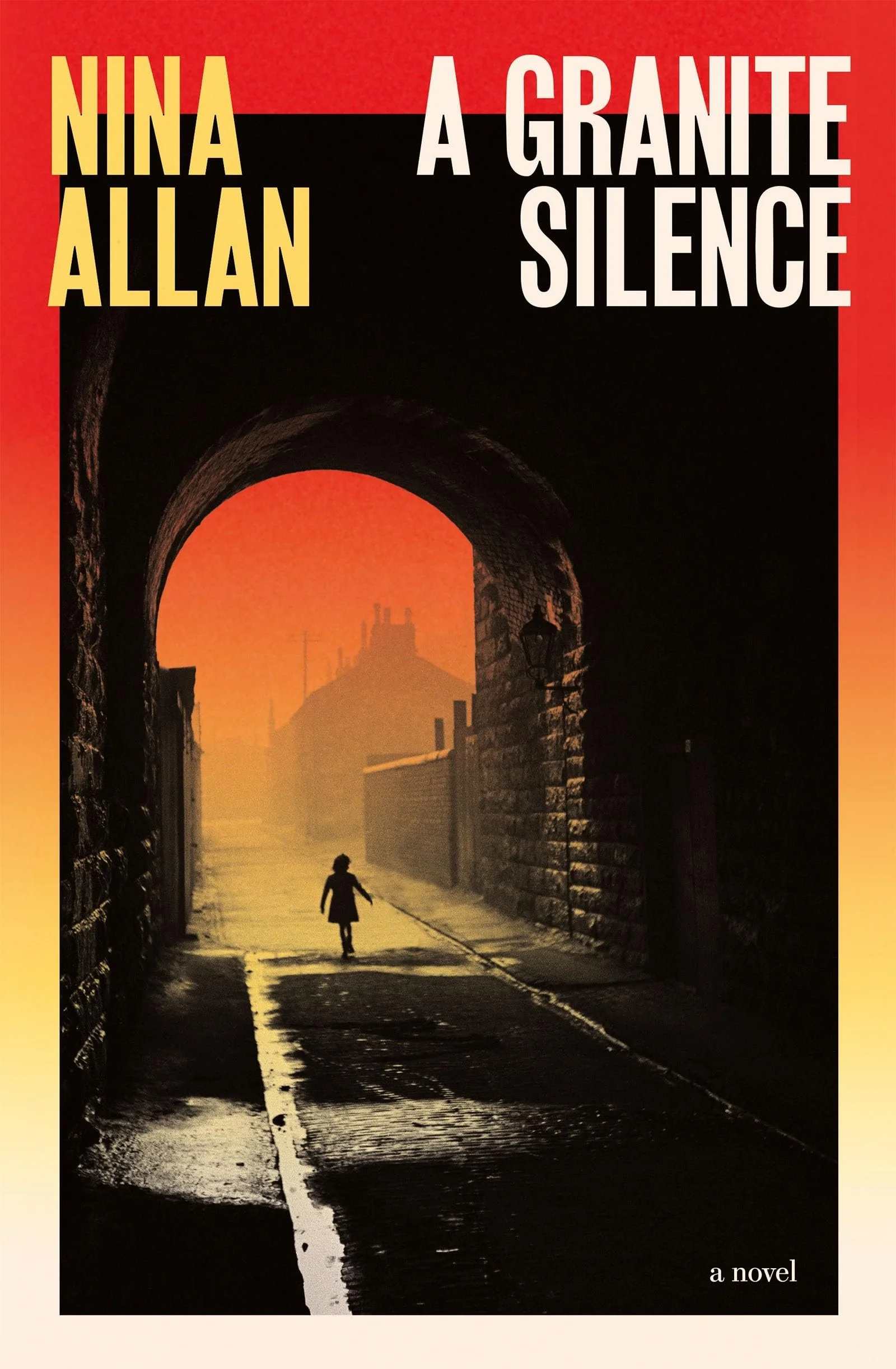
A Granite Silence by Nina Allan
Publisher – Riverrun
Published – Out Now
Price – £10.99 paperback £3.99 ebook
A Granite Silence is an exploration - a journey through time to a particular house, in a particular street, Urquhart Road, Aberdeen in 1934, where eight-year-old Helen Priestly lives with her mother and father.
Among this long, grey corridor of four-storey tenements, a daunting expanse of granite, working families are squashed together like pickled herrings in their narrow flats. Here are Helen's neighbours: the Topps, the Josses, the Mitchells, the Gordons, the Donalds, the Coulls and the Hunts.
Returning home from school for her midday meal, Helen is sent by her mother Agnes to buy a loaf from the bakery at the end of the street. Agnes never sees her daughter alive again.
Warning – this view will discuss the death of a child and mentions sexual abuse
Reading is fundamentally a pleasure for me as it’s the mixing of my mind with an author’s words and what they create. Very rarely will everyone’s mind’s eye imagine the same characters and places we go to in a book. This gets us into an interesting place when a book rubs me up the wrong way. Its not quite in a zone where I tend to enjoy going and I may find the themes and opinions offered disagree with mine. I may admire the craft but ultimately find the message wanting. That’s the very unusual experience I had of reading Nina Allan speculative fiction novel A Granite Silence.
In Aberdeen 1934 eight-year-old Helen Prestley comes home from school for lunch to her parent’s tenement building and after a shop errand is never seen again alive. After a search for several hours her body is found in a sack. Initial results pointed to asphyxiation and evidence of sexual assault. As the sack was dry after a night of rain attention turned to the residents of the block and in particular the Donalds who were at odds with the Priestley. After the husband had an alibi attention then turned to Jeannie Donald a 38-year-old mother. She was charged with murder and in the trial one of the first uses of forensic evidence helped tie the Donald’s home to the murder including a kitchen instrument used to simulate sexual assault. Donald offered no evidence of her own, was found very quickly guilty of murder but the initial death sentence was commuted to life after she confessed post-trial and she served ten years before living a new life of her own.
Oops sorry perhaps I should have mentioned the book’s plot? An author in the Covid pandemic stumbles across the story of Preistley and starts to write about it but finds herself spinning off tales of the cast from the speculative to the more ordinary and various characters try to get to the truth of what happened?
My feelings on this book are complicated to say the least. It’s a compelling read but I increasingly did not warm to it.
I’m reading this as I look at the British Science Fiction Association’s best Novel and this is for any novel length story of science fiction or fantasy. Now there is one of the imagined tales of the characters a strange trip to the desert in WW1 and where a medical doctor stumbles into a science fictional style plotline that if I’m honest is a interesting short story but not really for me central to the book. There is some imagining of a world where Helen Priestly did not die but is that really the fantastical or just a thought experiment? It feels the latter for me and I’m leaning more towards saying that a lot of the conjecture of other characters real and imagined is more feeling to be mainstream storytelling devices.
For me I ultimately feel this is a perhaps more literary example of True Crime and Gentle reader as you may know I do not like true crime as a genre very much. For me it’s a problematic genre that tends to sensationalise crime, forget the victims and feels more for entertainment than actual debate. There are exceptions books that explore miscarriages of justice or seek to redress the balance in favour of the victims. Coming back to the actual facts of Helen Priestley’s death I can confirm neither of those are true in this case, so what is the book then doing?
On the one hand Allan is an accomplished author and there are sections here I just found a pleasure to read. The book captures the grittiness of Aberdeen in 1930’s sections describing its future industrial decline and the way the street where this crime happened still lives on in the 2020s but as now faded shopfronts is quite powerful. There is a wonderfully weird cockney version of the Burns poem Tam O’Shanter that I felt added little to the story but is very entertaining and perhaps another example of the fantastical the desert SF section is wonderfully dark and mysterious and does not need to explain things to be effective. The various rotating characters created are always interesting. Words are economically used but to great effect and paint vivid pictures and at a pure writing level there was a lot to appreciate in it.
On one level the story reminds us people in any real-life drama move into the story and out and often vanish from history. Their major role in a famous incident is done I just struggled with how limited Allan is at finding out what happened next to anyone as 20th century records are normally quite straightforward to follow up on. The level of research a non-fiction story has is far more and the story doesn’t mention too many sources. I can’t say to what level Allan actually did but it feels a little underpowered in that area.
But the reason I have to say I’m less than keen is the themes that develop in the book. Very early on my eyebrows were raised as a contrarian view came up about how pandemic lockdowns were people sacrificing their freedom without question. A section delighted to find in the pandemic people not wearing masks on public transport. Allan finds the public response to the disappearance of Helen as ‘They are united not so much by compassion as by compulsion, energised by the sense of unease and hectic excitement that accompanies every tragedy” as if Allan would not think people want to help each other in a crisis (like they actually did in the more recent pandemic and I speak as someone who had to monitor those death figures regularly for their own line of work). When the trial is over Allan casts further aspersions on the public mood “ The City’s polyphony is brazen, declamatory, performaive. Factory music. A cheap counterfeit, the close presence of so much anger is disconnecting because it does not feel honestly earned” there is a strong whiff of the judging middle class in that gorgeously constructed set of sentences judging working class people for being angry at the death of a child.
As Allan looks into the events of the case post-trial and Donald’s eventual confession that this came out of an incident that perhaps triggered an underlying condition when she struck Helen. Allan notes that for many at the time hitting children was normal and indeed only now is a criminal offence. Allan has a small sense of admiration for the way Donald carried on and gets a second chance at life. Ultimately, I’m then in conflict with this approach as I’m thinking that a 38-year-old adult should know not to hit children hard enough to cause their death, not to hide their death that comes as a result and not defile their corpse. I think people can be justifiably angry at that. That Donald said nothing before her trial, and while I appreciate this is at the time of the death essence, means she made the family go through the trial before she tells her side of the story. Helen Priestly does not get a second chance at life and an imaginary one from Allan in a chapter does not really wipe that fact away.
Reading is always that mix of author and reader and here I find a book where I’m not swayed by the author’s viewpoints on the page. Are they their own? I cannot say but for me while I think this is fascinating and imaginative novel to read it reminds me of an ice palace – quite pretty to look at but leaves me very cold. It lingers in my mind but not necessarily for reasons I admire.